The people most impacted by the system are the ones changing it.
L2J doesn't just teach people about democracy. We build organizers and leaders who change it. Through peer-led civic education, a policy newsletter that reaches nearly 4,000 incarcerated people across Washington State (a third of the entire prison population), and a growing network of incarcerated Lead Organizers embedded in every major facility, we build the knowledge and capacity for system-impacted people to engage with the legislative process on their own terms.
That knowledge becomes power. Incarcerated, formerly incarcerated, and system-impacted people and their loved ones testify at the legislature, register their positions directly with lawmakers, build coalitions, and drive reform campaigns.
Our annual CommUNITY Symposium brings together system-impacted community members, legislators, prosecutors, and judges to build the cross-sector alignment that makes change possible.L2J doesn't just teach people about democracy.
When we lead with those most impacted, WE WIN.
EXPLORE INSIDE-OUT ADVOCACY
Click to scroll straight to a section, or scroll to explore.
Our peer-led civic education workshops have reached more than 2,000 incarcerated and system-impacted community members across Washington State. Facilitated by formerly incarcerated organizers in community spaces and by incarcerated Lead Organizers embedded in every major Washington State facility, sessions cover how the legislative process works, how to read and analyze bills, how to prepare testimony, and how to organize around specific campaigns. Lead Organizers are not just facilitators. They are the connective tissue of our inside-out model, disseminating information on current legislation, answering questions from their peers, and feeding intelligence directly into how we design and adapt our programs.
This is where civic knowledge becomes civic power - activating the most impacted to make real change themselves.
advocacy
Civic education builds the foundation. Advocacy is where that knowledge becomes power. The criminal legal system has disproportionately targeted and harmed Black, Indigenous, and communities of color. And it is precisely these communities that must lead the fight to transform it.
L2J's advocacy work is led by incarcerated, formerly incarcerated, and system-impacted people and their loved ones, who write bills, drive campaigns, build coalitions, testify at the legislature, and shape the policies that govern their own lives. We don't advocate for system-impacted people. We build the infrastructure for system-impacted people and their loved ones to advocate for themselves.
INSIDE/OUT POLICY NEWSLETTER
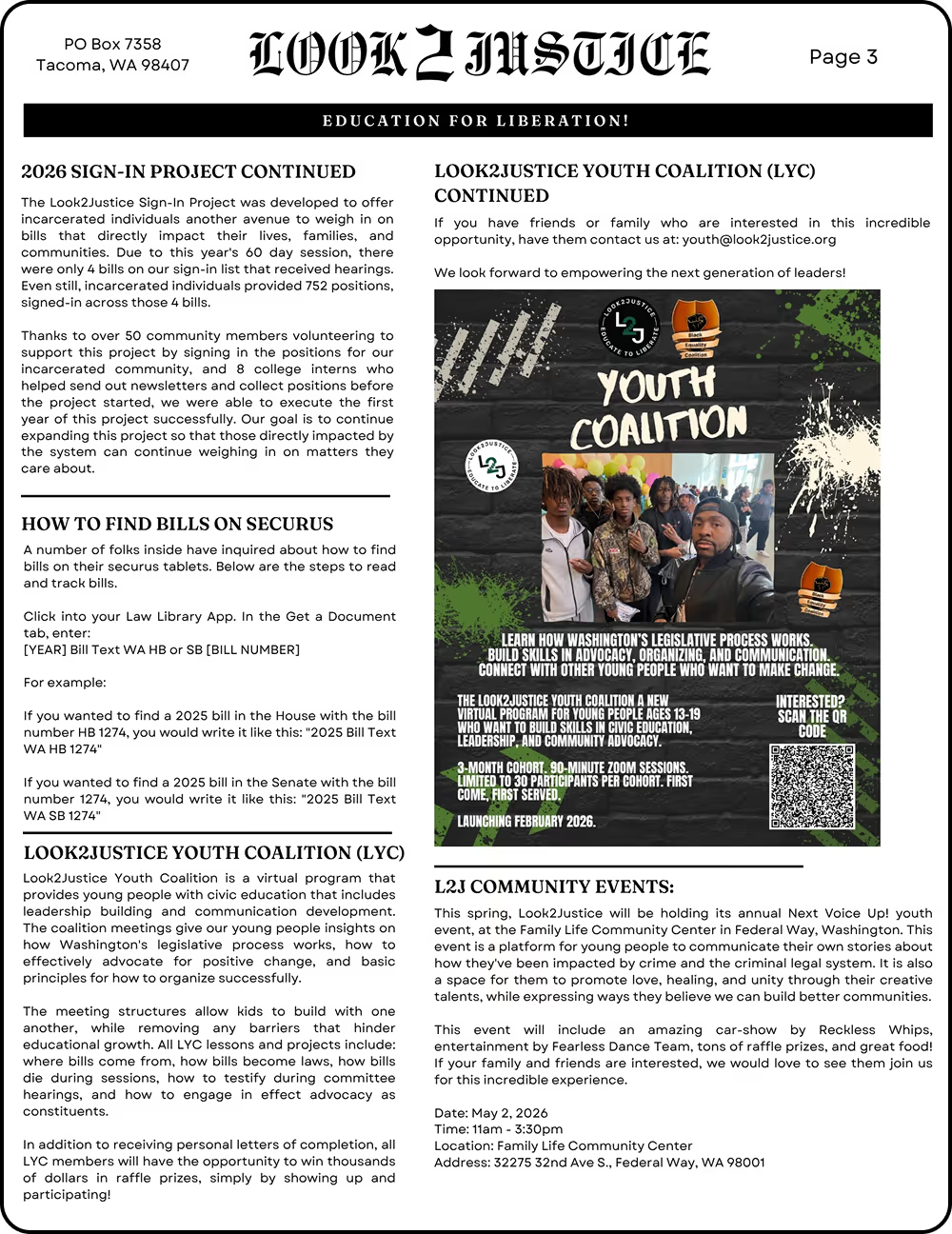
Our quarterly policy newsletter is both a civic education tool and a feedback loop. Distributed to nearly 4,000+ incarcerated people (and growing) across every major Washington state facility, it keeps our network informed on current legislation, active campaigns, and opportunities to engage.
Incarcerated contributors shape its content based on what campaigns are gaining traction inside, what questions people are asking, and where knowledge gaps exist. What we hear shapes everything we do.
The sign-in project
For decades, incarcerated people have been the constituents most directly affected by criminal legal policy and the ones with no formal mechanism to make their voices heard in the legislative process.
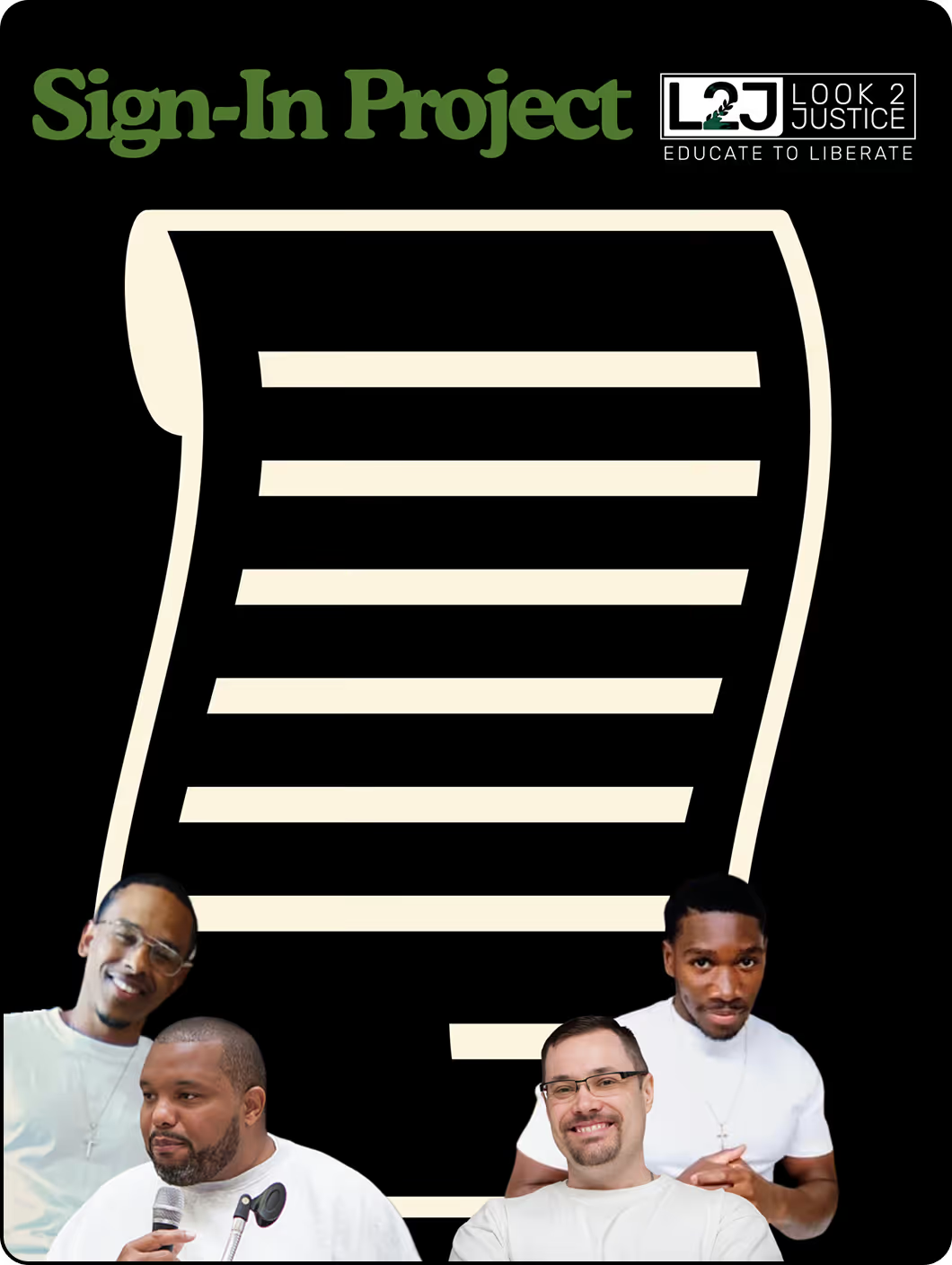
The Sign-In Project closes that gap. In partnership with community volunteers, the Sign-In Project enables incarcerated advocates to formally register pro, neutral, or con positions on priority bills through Washington's official legislative sign-in system.
Because people in prison lack internet access, trained community volunteers enter sign-ins on their behalf on the Legislature's website, creating a measurable, high-volume show of constituent engagement that decision-makers can see firsthand.
At full reach, the Sign-In Project has the potential to make the voices of all 14,000+ people currently incarcerated in Washington visible and countable in the official legislative record.
SURVIVORS FOR LIBERATION COALITION
The Survivors for Liberation Coalition centers the voices of survivors of gender-based violence, particularly BIPOC and LGBTQIA+, who are disproportionately impacted by both violence and the systems that claim to address it. We believe that survivors are experts on the harm they have experienced and the conditions that create it. We also believe the power of how we work towards restoration should rest with their voices, not the voices of legislators, prosecutors and judges.
We want to know what healing looks like for these survivors, and what accountability looks like for those who've caused them harm.
The coalition builds solidarity between survivors inside and outside prison walls, amplifies their stories, and advocates for approaches to justice rooted in healing, liberation, and community — not criminalization.
We are proud to partner with Shannon Perez-Darby, a founding member of the Accountable Communities Consortium. Shannon is a queer, mixed Latina anti-violence advocate, author, and activist with over 15 years of experience centering queer and trans communities of color in addressing domestic and sexual violence, accountability, and criminal legal system harms.
ANNUAL COMM(UNITY) SYMPOSIUM
Every year, Look2Justice brings together a room of individuals that doesn't usually exist. The Comm(Unity) Symposium is a free, community-centered event designed by currently incarcerated organizers and facilitated by formerly incarcerated leaders, 200+ system-impacted community members, legislators, prosecutors, judges, and advocates build bridges between those who experience harm and those with the power to change it.
Every symposium is accessible, recorded for those who cannot attend in person, and structured so that everyone in the room, not just speakers, has space to be heard. These are not panels or performances. They are spaces where the distance between lived experience and institutional power shrinks; and where the cross-sector relationships that make lasting change possible are built.
Coming soon, on November 14, 2026 Look2Justice will host its 6th Annual Symposium in an effort to address the hidden labor of women on all fronts related to the carceral system and the movements built to deconstruct them. It honors the resilience of women who maintain the human bonds essential to healing and reentry, while affirming the dignity and humanity of all those touched by the carceral system.
Look2Justice’s 5th Annual Symposium: The Real Cost of Incarceration brought together community members, advocates, organizers, and directly impacted people to explore the lasting human and societal impacts of incarceration. Held in partnership with local organizations and community leaders, the symposium examined how incarceration affects individuals, families, and communities far beyond the prison system itself. While the United States spends nearly $200 billion annually on imprisonment, the event focused on the deeper emotional, social, and generational costs carried by impacted communities.The symposium featured keynote speaker Chesa Boudin, founding Executive Director of Berkeley’s Criminal Law and Justice Center, alongside a powerful talking circle led by young adults whose parents were serving long prison sentences. Throughout the day, participants engaged in conversations centered on healing, accountability, advocacy, and systemic change.The event was facilitated by Eugene Youngblood and took place on Saturday, November 15, 2025, at the Tukwila Community Center in Washington State.
The 2025 Spokane Symposium: Breaking the Cycle, Healing Past Harms brought together community members, advocates, organizers, and policy leaders to examine the lasting harms caused by outdated sentencing laws and the barriers to meaningful sentencing reform.Hosted by Look2Justice in partnership with Range Media and The Black Rose Collective, the symposium focused on the reality that many sentencing reforms are passed prospectively, leaving thousands of currently incarcerated people serving sentences now widely recognized as unjust. Through community dialogue, expert panels, and small-group discussions, the event created space for impacted communities and decision-makers to engage directly around accountability, healing, and legislative change.Centered on bridge-building and collective action, the symposium explored how communities can confront past harms while working toward a more equitable justice system.
The 2024 4th Annual Symposium brought together survivors, advocates, organizers, and policy experts to explore the role of survivor voices within the movement for sentencing reform.
Hosted by Look2Justice in partnership with FAMM and Collective Justice, the symposium centered conversations around the needs, rights, and experiences of survivors in post-conviction advocacy work. Throughout the day, speakers challenged common assumptions surrounding harm, accountability, and punishment — including the belief that all survivors support extreme sentencing, or that people who have caused harm cannot also be survivors themselves.
Through dialogue, collaboration, and shared testimony, the symposium created space for nuanced conversations about healing, justice, and meaningful legislative reform while strengthening connections across impacted communities and advocacy organizations.The event took place on November 16, 2024, at the Tukwila Community Center in Washington State.
Breaking the Cycle: Healing Past Harms was a community-centered symposium focused on the ongoing challenges surrounding sentencing reform in Washington State and across the country.Hosted by Look2Justice and FAMM, the event explored how many legislative reforms continue to apply only prospectively, leaving thousands of people serving sentences now widely recognized as unjust. Through conversations with community members, advocates, and policy experts, the symposium examined pathways toward accountability, healing, and meaningful relief for impacted communities.The event created space for dialogue between directly impacted people and those with the political power to shape policy, with a focus on bridge-building, collaboration, and systemic change. Additional support for the symposium came from organizations including the ACLU of Washington, Collective Justice, and Freedom Project.

.avif)


%20Large.jpeg)